OSHAWA HOMEOWNER GUIDE
Foundation crack repair in Oshawa
Water visible at one foundation crack can make a targeted repair worth discussing. An assessment should establish whether the crack is the entry point, whether the wall is moving, and whether exterior drainage is contributing.
What should you look for before asking for an estimate?
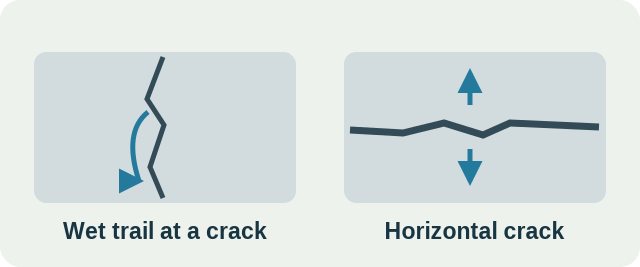
Note whether the wall is poured concrete or concrete block if it’s visible. Photograph the entire area and the crack close up, with a ruler or another scale beside it if you can do so safely. Record the direction, approximate length, whether the two sides are level, and if water appears there after rain or thaw.
- Water through the crack: Note where the wet trail starts and if it returns in the same spot. Water can travel behind drywall or along the floor before becoming visible.
- Water elsewhere as well: Mention wet wall–floor joints, neighbouring cracks or a full window well. A single patch may leave a separate entry point untouched.
- Previous repairs: Tell the contractor if the crack was injected, patched or painted over, and how long it stayed dry afterward.
- Outside conditions: Record whether a downspout discharges near that wall or whether runoff pools beside it after a storm.
When does a crack need a structural assessment?
Raise a widening crack, visible displacement, a bowing wall, or a horizontal or stair-step crack with a qualified professional. If movement is suspected, ask whether an independent structural engineer should assess it before work is selected.
Direction and appearance give the assessor clues, but they cannot tell you on their own how serious a crack is. If you have older photos, compare the same area over time. Describe changes in the wall and nearby finishes, including doors that recently began sticking or gaps that have changed.
Where targeted repair fits alongside waterproofing
- Crack injection or sealing
- A contractor may propose injection for an accessible crack in poured concrete after checking the wall and the water path. Ask what material they recommend, why it suits that crack, how they’ll prepare the opening and how they’ll check the result.
- Targeted exterior repair
- Outside access may let a contractor inspect the affected wall face and address a local entry point or exterior drainage problem. Ask how much excavation is involved and how the surface will be restored.
- Broader drainage assessment
- If multiple spots are wet, the wall–floor joint seeps, or water returns after a prior repair, ask what evidence points to another route or a perimeter drainage issue. Compare interior and exterior approaches.
For background on foundation cracks and flood prevention, see the Institute for Catastrophic Loss Reduction’s homeowner handbook (PDF) and Oshawa’s guidance on basement seepage.
Questions to put in the written quote
- Which crack and which wall are included? How did you identify the entry point?
- Is drywall removal or other access work included? Who reinstates the finishes?
- Is exterior drainage work recommended? What evidence supports that?
- Does the warranty cover the repaired crack, the treated wall or any return of water? What is excluded?
If two quotes propose different scopes, start by comparing what each identifies as the source. The written quote checklist can help you compare the rest.